How Much Can You Save Buying New Replacement Windows
Calculator Gives Savings From New Windows
This is the question everyone wants answered — and the honest truth is, no one can give you a single number. Your savings depend on a handful of real variables specific to your home. Use our Energy Saving Calculator for Windows
What Affects Your Savings
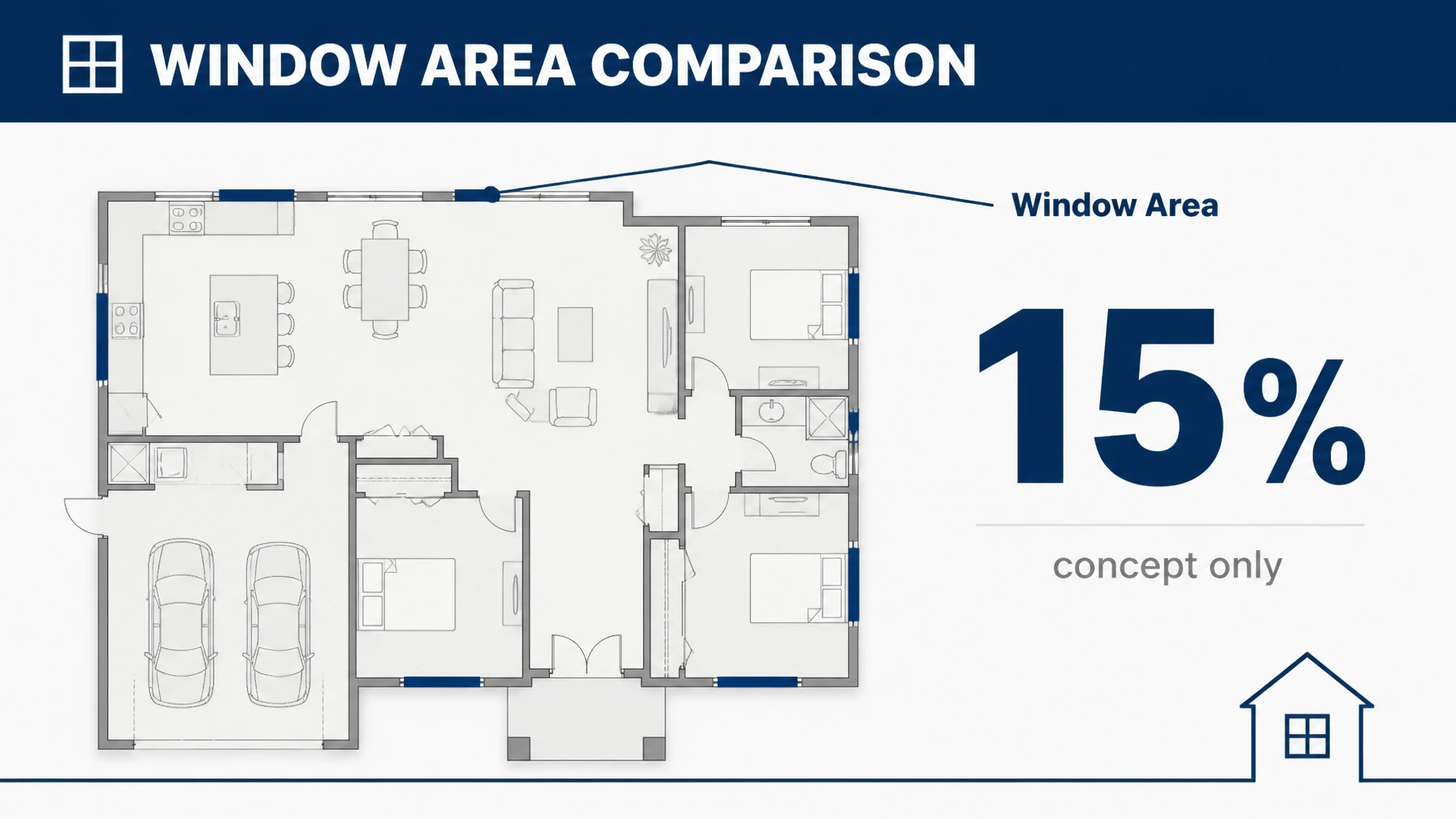
How many square feet of windows do you have, and what share of your home's total square footage is that? A typical 2,000-square-foot home has around 15% window area — roughly 300 square feet. If your home has a higher percentage than that, you stand to save more than a home with less window area. If it's lower, expect less.
The condition of your present windows. How bad are they, really? Broken sashes, hanging glass, cracked panes — the worse shape they're in, the more you'll save, and the faster your new windows pay for themselves. Whether you currently have single-pane or double-pane glass, whether the seals have failed, and whether you have storm windows in place all factor into how much value your old windows still have left.
What you're buying. Double-pane or triple-pane? What do the numbers on the NFRC label actually say? A better-performing window will save you more — but quality isn't the same thing as price. Don't assume the most expensive option is automatically the best-performing one.
Don't Be Fooled
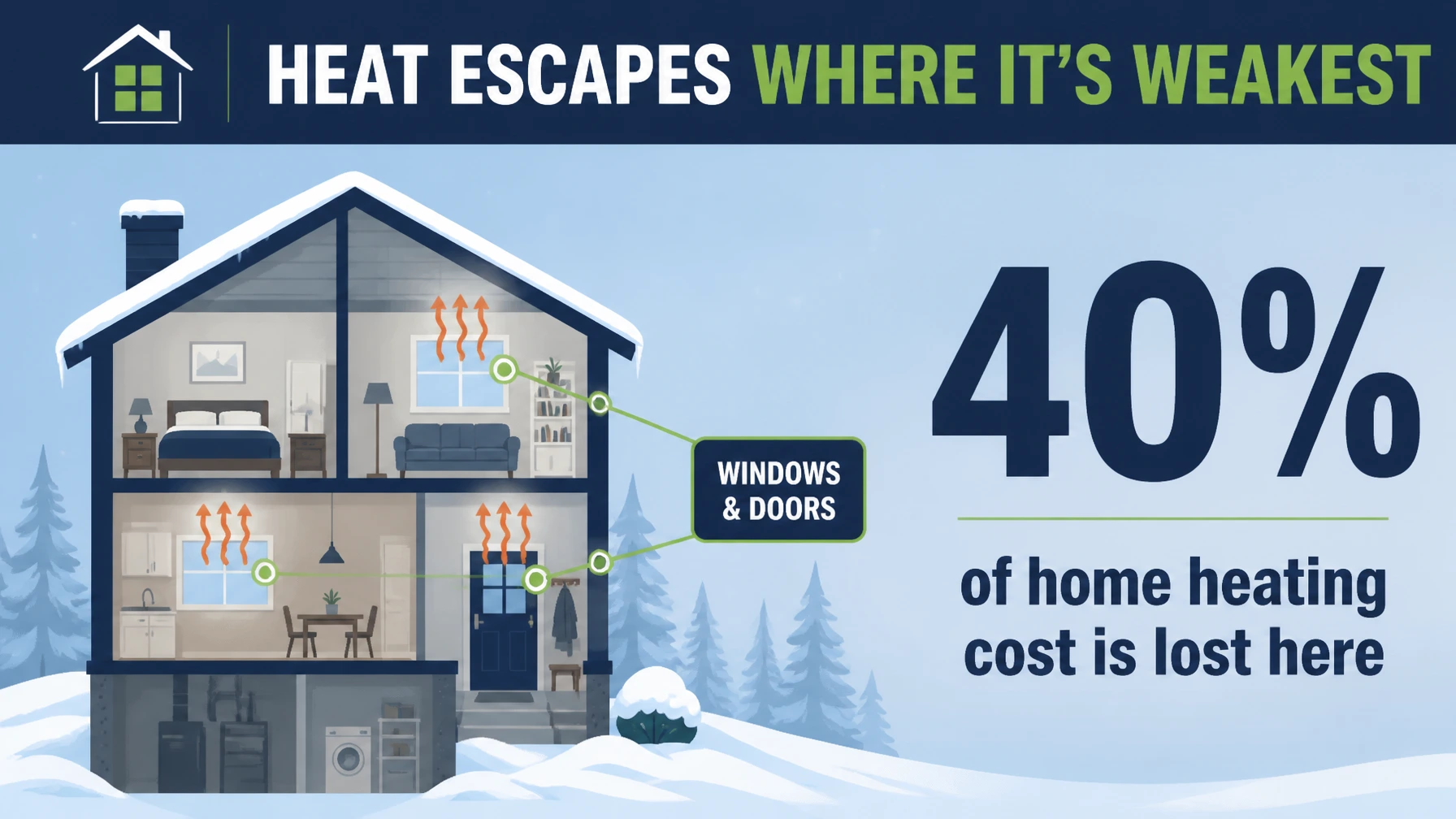
The U.S. government estimates that roughly 40% of a home's heating cost is tied to windows and doors. So be skeptical of any company promising a flat 50% savings — that's not a realistic number, and it's often a sales tactic, not a projection.
I saw this firsthand. A company in the Buffalo, NY area was charging $1,800 for a window I install for $500. They backed it up with a written 50% savings guarantee — but the fine print required you to replace every window and door in your house at their price to qualify. That kind of savings simply isn't achievable. When customers came back holding that written guarantee, the company just refunded the difference for one year — a one-time payout of maybe $500, on a job where they'd already overcharged the customer more than $1,000 per window and door. It was a great sales gimmick for moving overpriced windows. That company is no longer in business.
How to Estimate Your Own Savings
If your January gas bill was $300 and a salesman tells you to expect a 25% savings, that doesn't mean your next gas bill will be $225. Even in July, when you're not heating your home, you still have a gas bill — so a more realistic expectation would be a bill closer to $250.
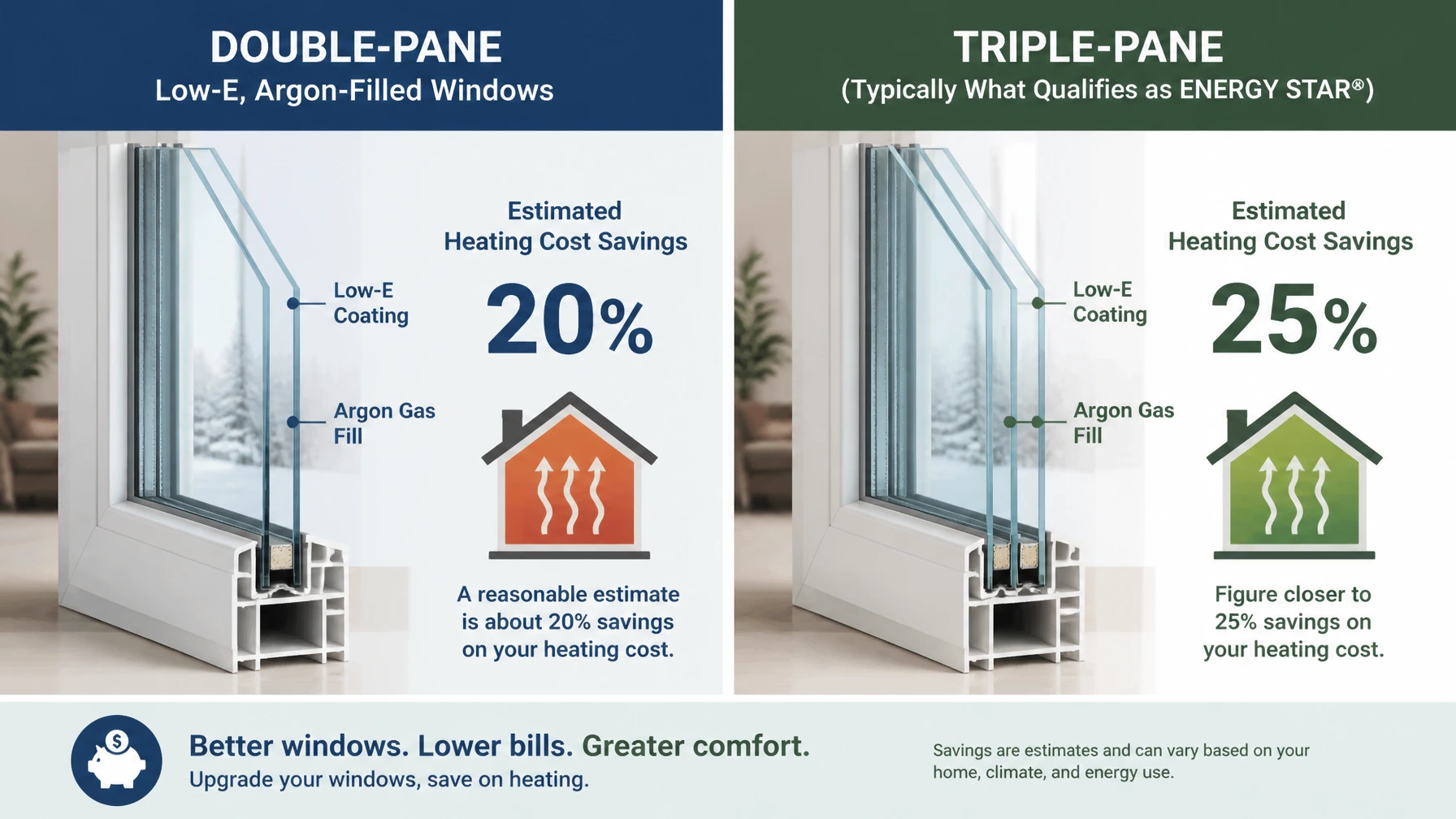
For double-pane, Low-E, argon-filled windows, a reasonable estimate is about 20% savings on your heating cost. For triple-pane (typically what qualifies as ENERGY STAR), figure closer to 25%.
Here's how to calculate it yourself:
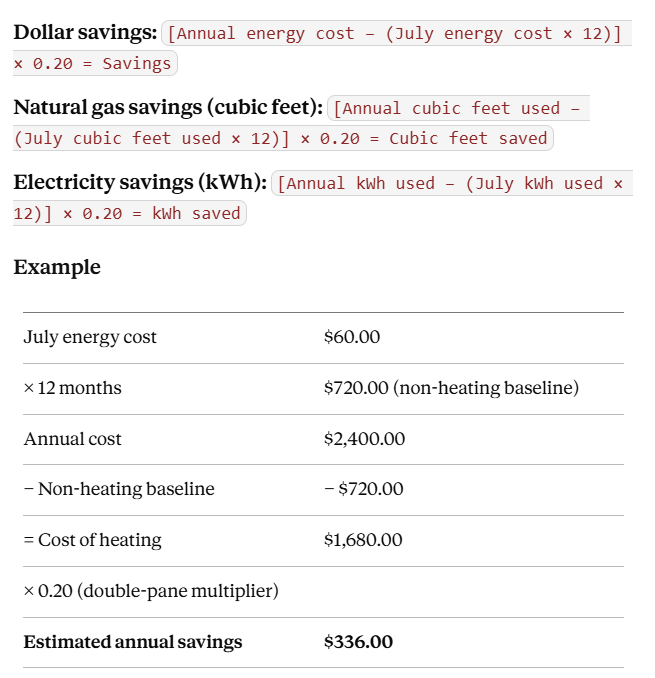
1. Find your total energy spend (or usage) for the last 12 months.
2. Find what you spent (or used) in your most recent July, and multiply that by 12.
(This approximates your year-round non-heating baseline — the energy used by your stove, water heater, dryer, and other appliances that run regardless of season.)
3. Subtract that baseline from your annual total. What's left is roughly what you're sp ending to heat your home.
4. Multiply that heating amount by 0.20 (double-pane) or 0.25 (triple-pane) to estimate your savings.
Cooling Benefits Too
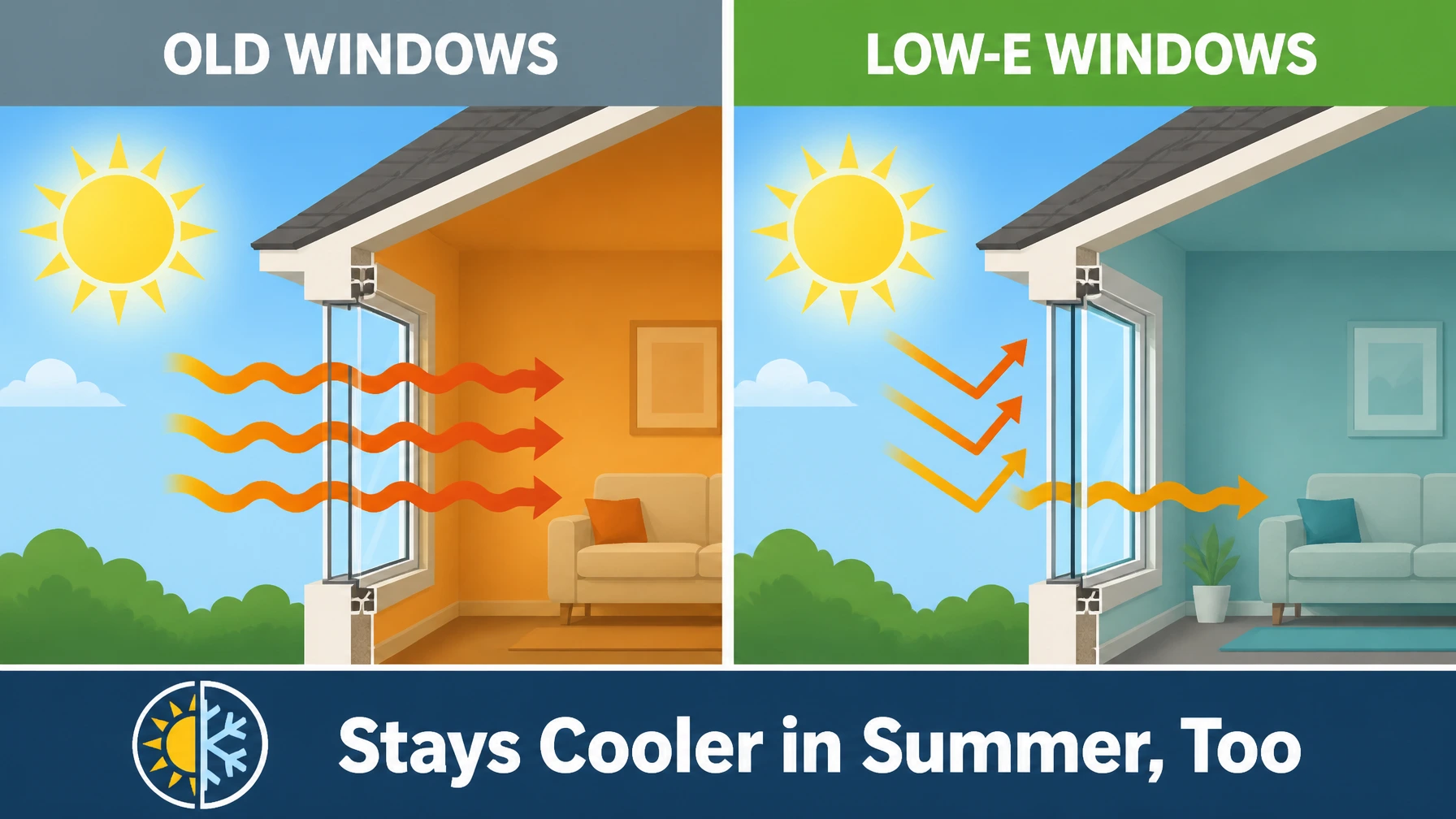
Here in the Buffalo, NY area, heating cost is the bigger concern for most homeowners — but new windows help in summer too. They filter long-wave radiation, which keeps your home cooler and can reduce air conditioning costs during the hottest months.
Beyond the Energy Savings
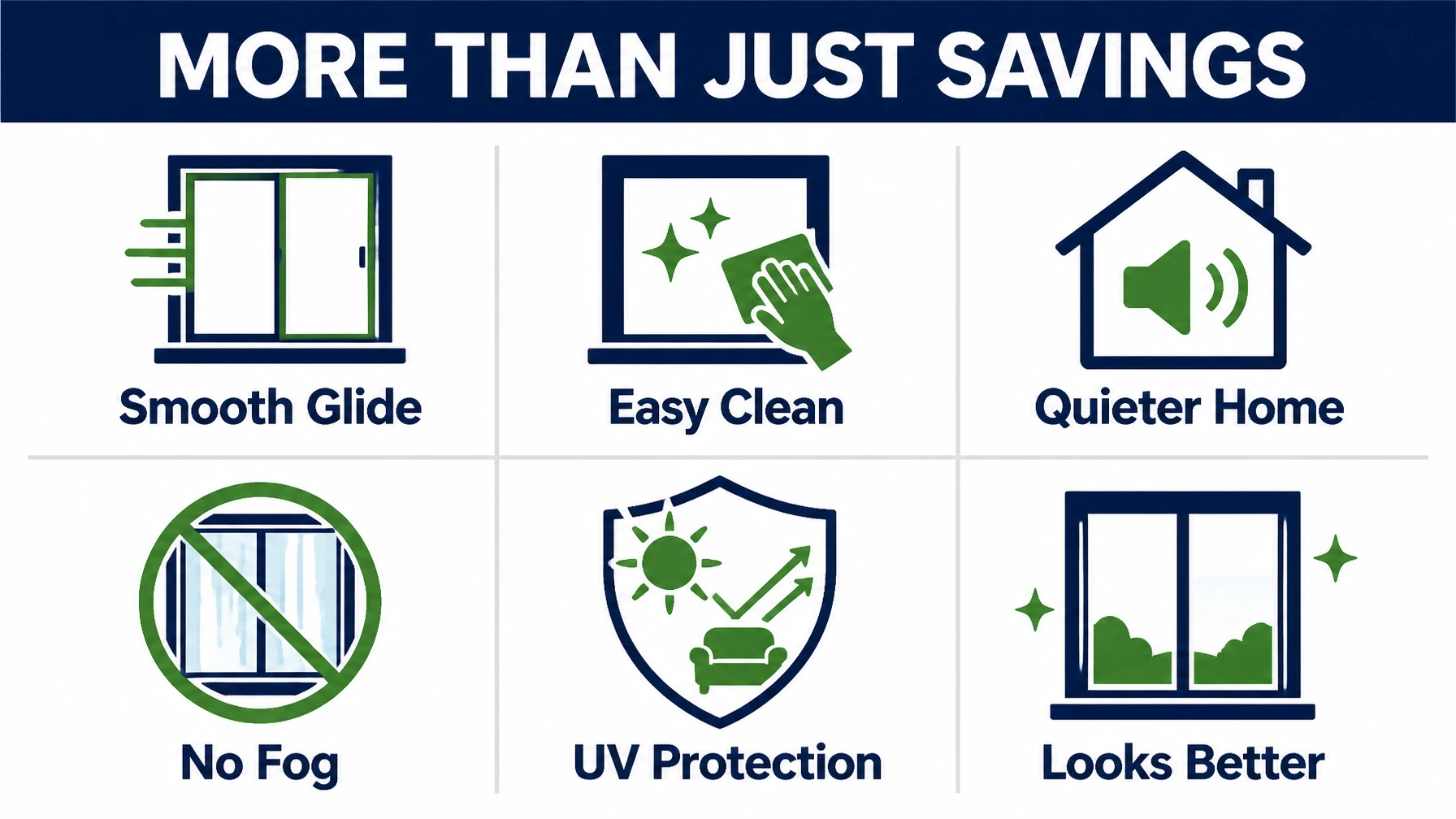
Energy savings might be what gets you looking at new windows, but they're not the only benefit. New windows operate more smoothly than old ones, won't be painted shut, are easier to clean, look better, reduce exterior noise, and won't fog up in cold weather. Low-E glass also blocks much of the UV light responsible for fading drapes, furniture, and carpeting.